
 Good work.


A family should not have to hunt for your phone number
Start with the person who needs you now. A clearly labeled phone link and a short explanation of whom to contact can help them move forward. Your actual availability belongs beside that contact route. If calls are answered around the clock, we can say so; if your arrangements differ, the website should explain them accurately.
Other visitors have a different purpose. They may be checking a service time, looking for an obituary, sending condolences, or planning ahead. I organize those routes so urgent help stays easy to find while the rest of the site still feels calm. A thoughtful layout can do a great deal without raising its voice.
Give families a useful introduction to your services
Funeral, burial, cremation, and pre-planning pages should describe the services your funeral home actually provides. Explain how a conversation begins, what families can ask about, and where they can find practical information. You supply or approve the service details, pricing information, and wording before publication.
- Immediate assistance: a visible contact route and the first step your team wants families to take.
- Planning ahead: a separate explanation and inquiry route for people researching their options.
- Attending a service: current dates, location details, directions, and any arrangements guests need to know.
- Your people: real staff photographs, names, and a personal introduction to the team.
See my Howell-Lussi project
Howell-Lussi is a funeral home website I designed in West Pittston. The site brings together services, staff, the funeral home’s history, pre-planning information, and links to current obituaries. It gives you a real example of how I approach a business where clarity and care belong together.
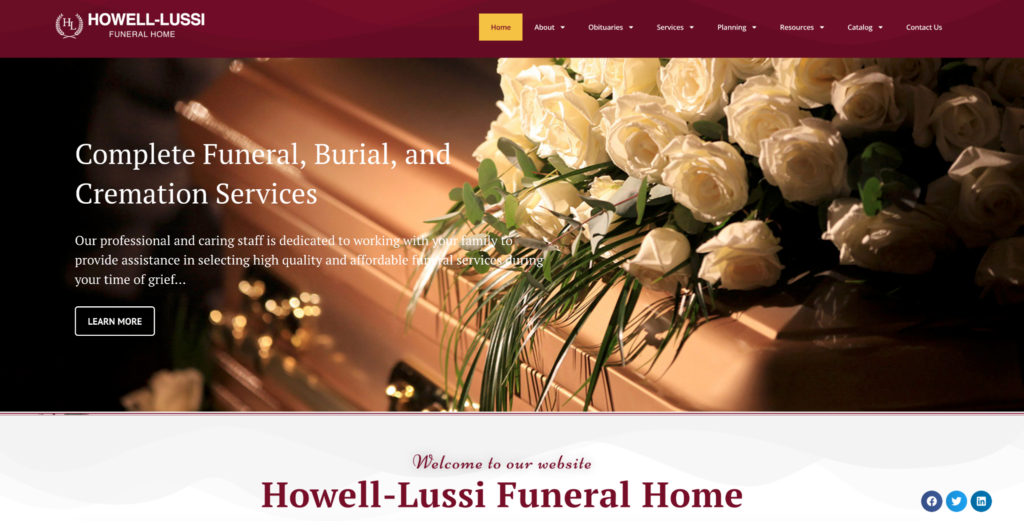
You can see the project in my client stories or visit Howell-Lussi’s website. Your project will follow your own service mix, brand, and working arrangements. We discuss obituary providers, memorial tools, and other features before agreeing on scope.
Keep the practical details easy to maintain
Directions, parking information, accessibility details, and contact options deserve a clear place on the site. Obituaries and service notices may live in a specialist platform you already use. We can plan a link, embed, or supported integration around that system, including who will update it. We should settle that before the design is finished.
For a five-page build, one possible plan is Home, Services, About, Planning Ahead, and Contact. That is an example to discuss, not a requirement. If your obituary system or individual services need additional pages or integrations, we quote those separately. Website care can also help keep the site maintained after launch.
Start with a homepage direction
Tell me about your funeral home, your existing website, and what families have difficulty finding. I’ll put together a free homepage preview so you can see a direction before deciding on a build. You work directly with me on the words and presentation.
Can you keep our existing obituary provider?
We can review the provider and the link or integration options it supports. Moving or rebuilding an obituary database is separate work and should be agreed in advance.
Do you work with independent and family-owned funeral homes?
Yes. We can build around your team, history, services, and community. The website should feel like your funeral home, with the information families need.
What does a funeral home website cost?
A1 Website Foundation is $1,995 and includes up to five core pages, copywriting, custom WordPress design, initial on-page SEO and an inquiry form. A1 Design & Grow is $2,995. A1 Brand Relaunch is $3,995. The two larger packages include up to five core website pages, five additional local service-area pages, initial on-page SEO, and the agreed lead magnet and follow-up setup. A1 Brand Relaunch also includes blog setup and the agreed brand materials. We confirm the pages, features and scope before you pay. Larger projects are quoted separately.
